
Data-Driven Modeling Lab
Music Intelligence Lab

Our work crosses multiple disciplines, including: music, mechatronics, algorithms, machine learning, complex systems, differential equation modeling, and materials. The projects are organized around two threads: the Data-Driven Modeling Lab and the Music Intelligence Lab (or µ-lab). Many projects come down to questions about intelligence (artificial, natural, and embodied) with the hopes of finding good answers about who and what we are. More questions we're currently thinking about: can the scientific process be automated? And what is a well-designed movement-to-sound mapping?

Scientific ML

Learning interpretable dynamics from data: equation discovery, dimensional consistency, and multi-scale modeling.

Equation Discovery from Partial Measurements

Equation Discovery from Partial Measurements

scientific MLSINDydynamical systems

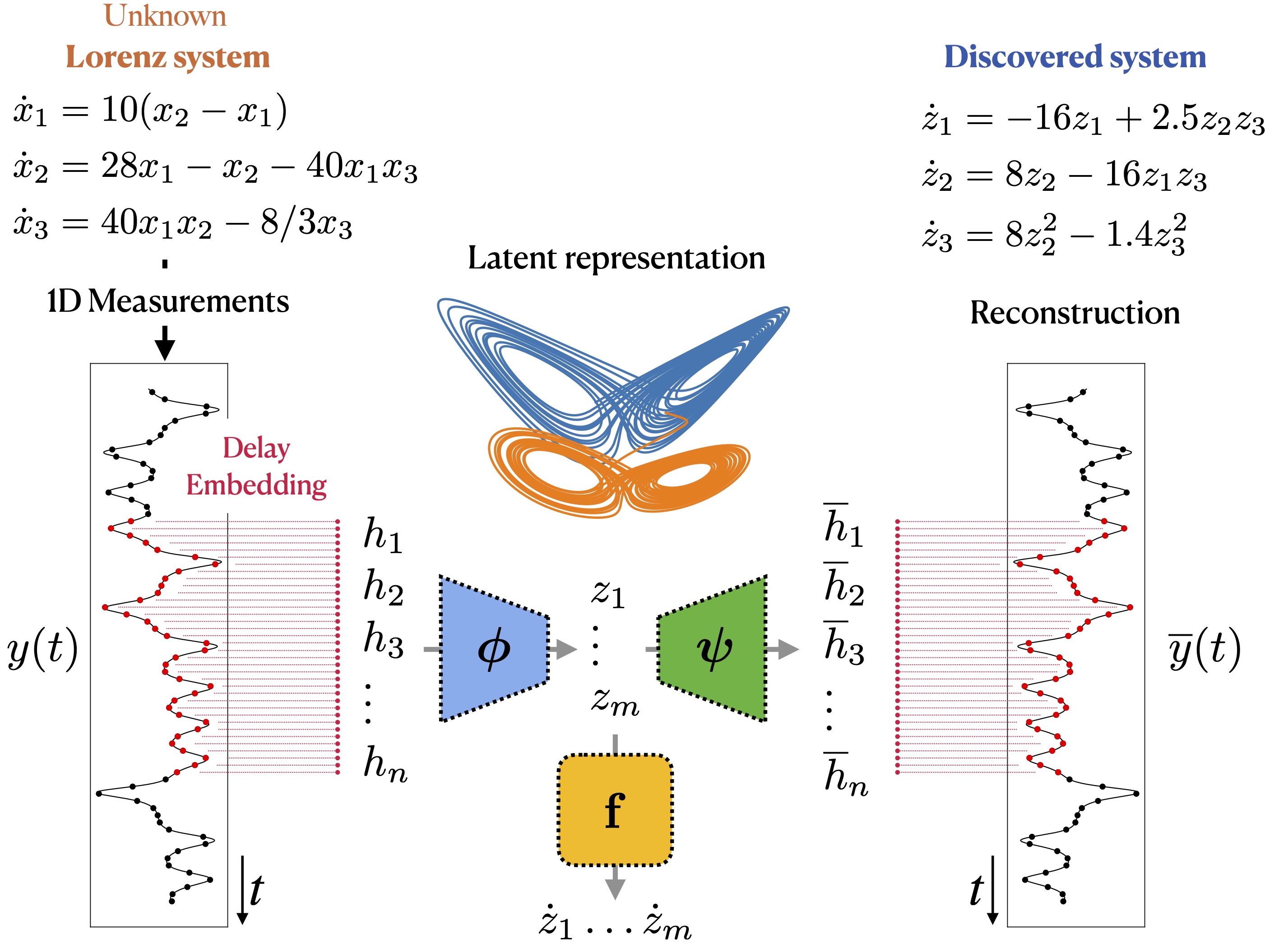
Real-world systems, from neurons to ecosystems, are rarely observed in full: we see projections, partial measurements, or noisy signals. This line of work asks how far we can push equation discovery when the full state is hidden. It combines deep-delay embeddings (inspired by Takens' theorem), sparse regression (SINDy), and geometry-informed regularizers, applied to problems in neuroscience, Mediterranean phytoplankton dynamics, videos of a Malkus waterwheel, chaotic systems, and others.

with Steven Brunton, Nathan Kutz, Lama Sleem, Issar Amro, Sara Najem, Arij Daou
Dimensionally Consistent Learning

Dimensionally Consistent Learning

scientific MLdimensional analysis

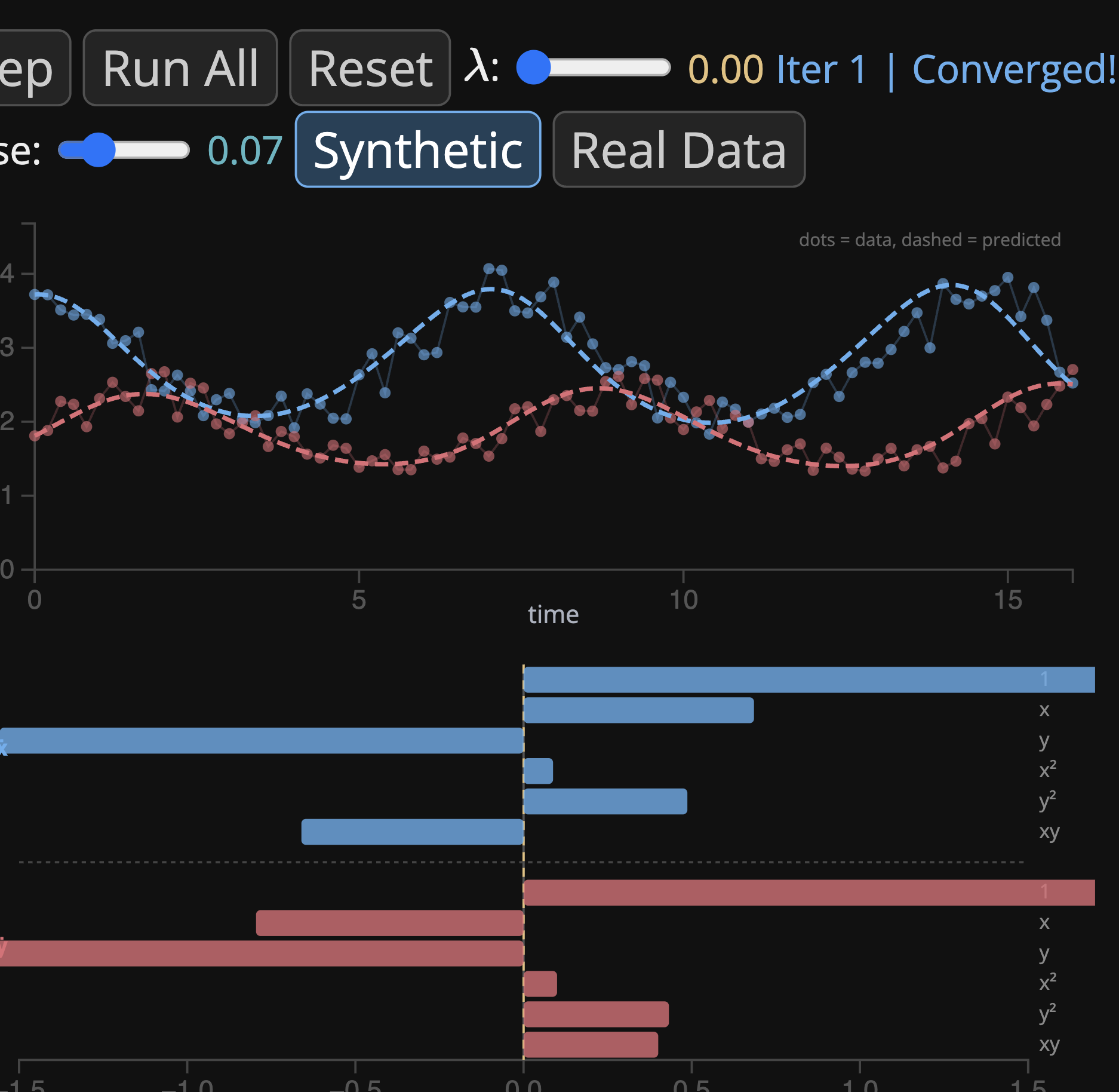
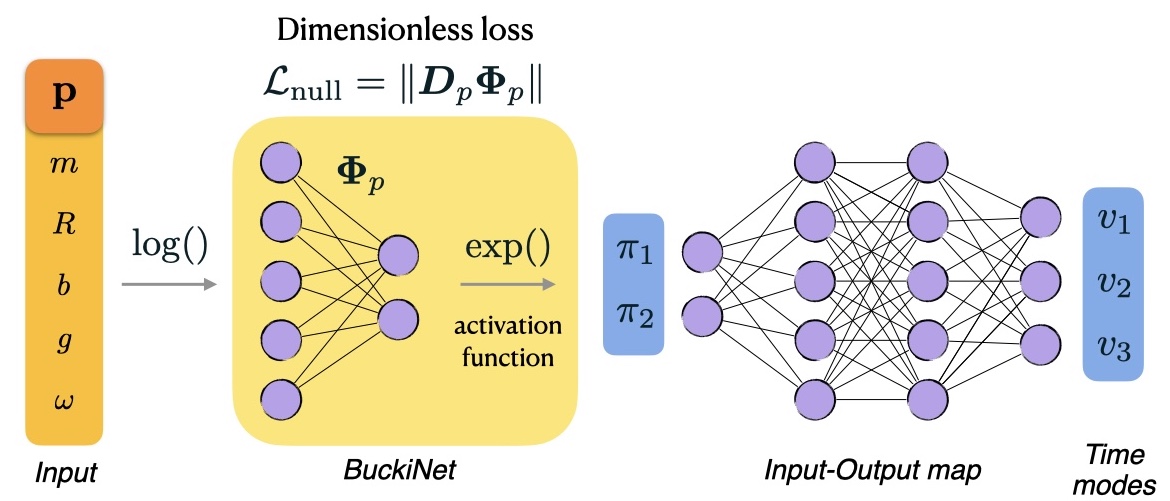
All measurements have units. Any attempt at bringing physics with ML should account for this. Modern deep learning algorithms rarely do. This work builds architectures where dimensional analysis, symplectic structure, and interpretable primitives are enforced by construction rather than learned. This principle generalizes to the discovery of Hamiltonian expressions (which have units of Energy) using Symplectic-Buckingham networks.

with Nathan Kutz, Steven Brunton, Sara Najem, Joe Germany

Music & Instruments

Instruments, generative composition, and computational analysis of music, with a soft spot for Arabic maqam and body-driven sound.

The Musical Flow Rope

Digital Music InterfacesMLMusicRope Flow

A spinning flow rope has an M5Stack IMU that broadcasts over BLE to a live pipeline: movement classification (12-label taxonomy), transition-sparse VQ tokenization, latent-space discovery via UMAP and a Hilbert transform, and audio synthesis via Ableton Live. The Musical Flow Rope was started in 2024 as our first movement-to-sound experiment, independent of any external grant. Its ongoing extension into a broader body-and-dance instrument is now one strand of the AFAC-funded Music in Motion project (2026 to 2028).

with Olivier Chiniara, Samir Shaker
A Glove Music Instrument

A Glove Music Instrument

mechatronicsmusicwearable

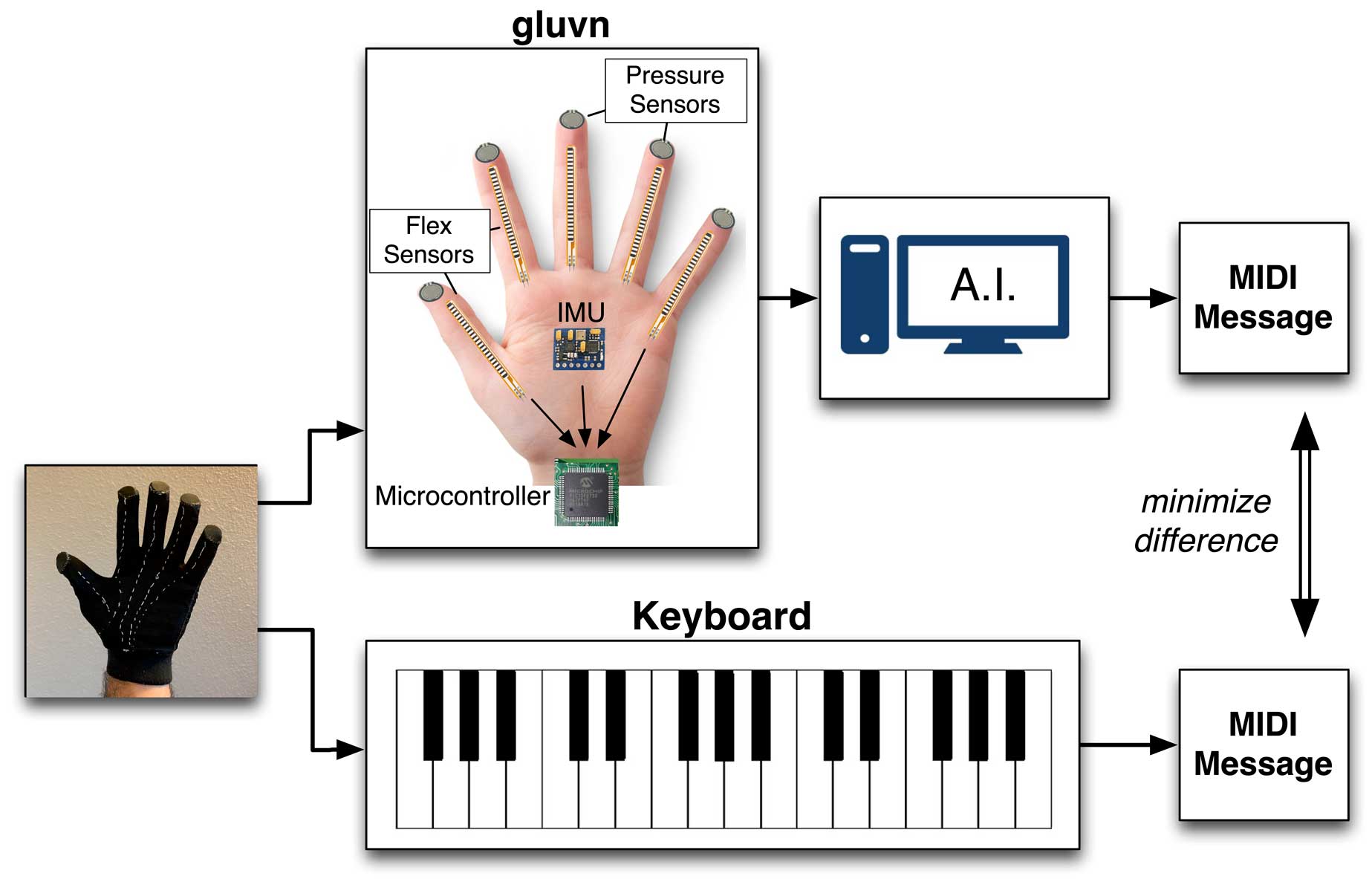
A five-finger flex/FSR sensor glove that turns joint angles, gestures, and finger contacts into continuous musical control signals. It's an experiment in what an intuitive movement-to-sound mapping actually looks like when the interface maps the high dimensional degrees of freedom of the hands. The instrument is an experiment in "Music in Motion", exploiting the fact that most instruments are played with hands. The complexity is in finding intuitive gesture-to-sound maps.

with Helene Jabbour
Arabic Maqam Archive & Identification

Arabic Maqam Archive & Identification

MIRaudio MLMaqamArchiveArabic Music

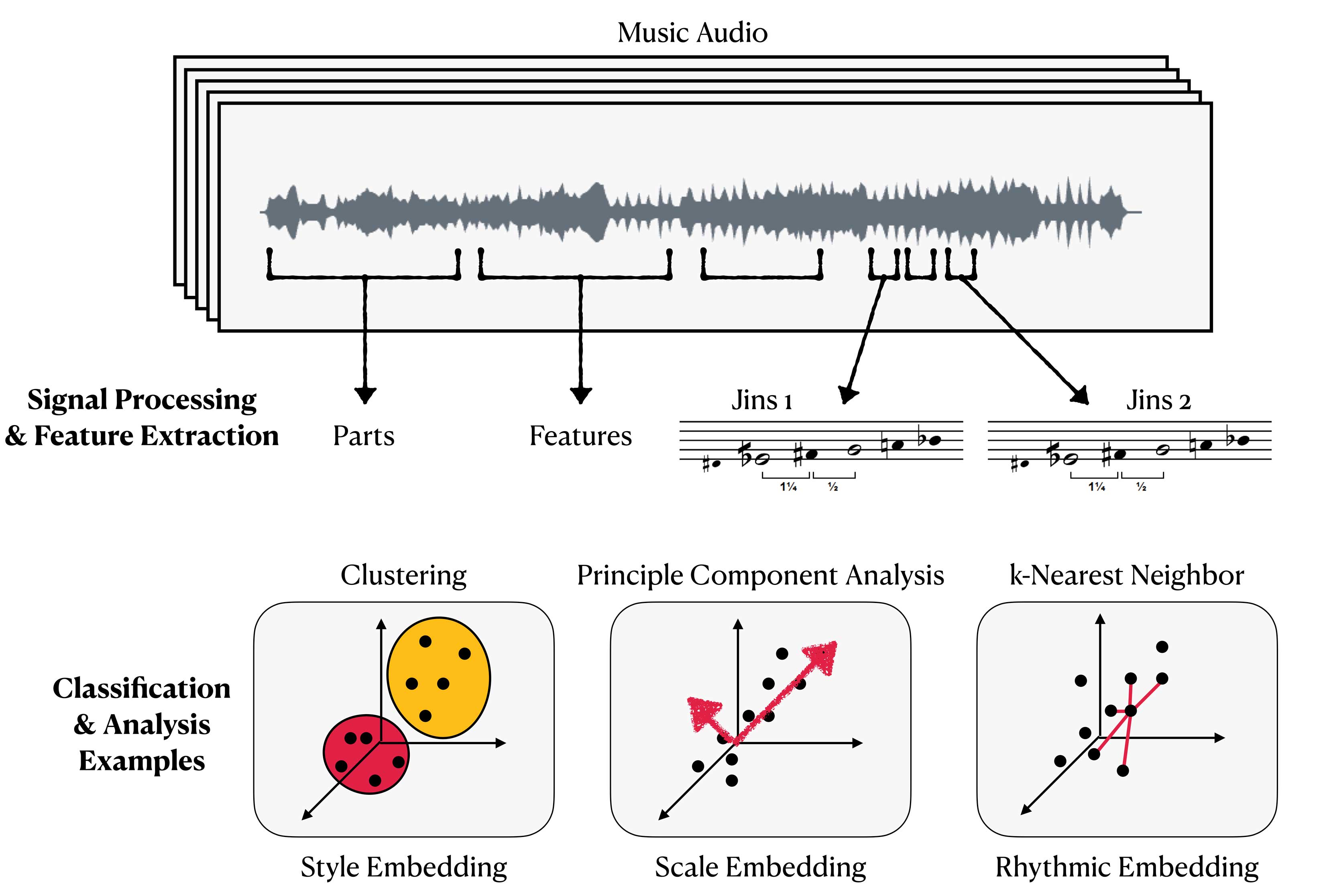
Arabic maqam is a modal system with rich intonation, subtle transitions between ajnas (Sayr), and a corpus underrepresented in mainstream MIR. Khyam Allami has leads a project on a digital arabic maqam archive (DiArMaqAr); learning to better Maqam identification from audio, and a deeper understanding of modulations, as introduced by Sami El Shawwa. Papers at ISMIR 2026.

with Khyam Allami, Ibrahim El Khansa, Mohammad El Asal, Dany Abou Jaoude, Sara Najem, and others
Circle of Fifths from Bach's Well-Tempered Clavier

Circle of Fifths from Bach's Well-Tempered Clavier

musicML

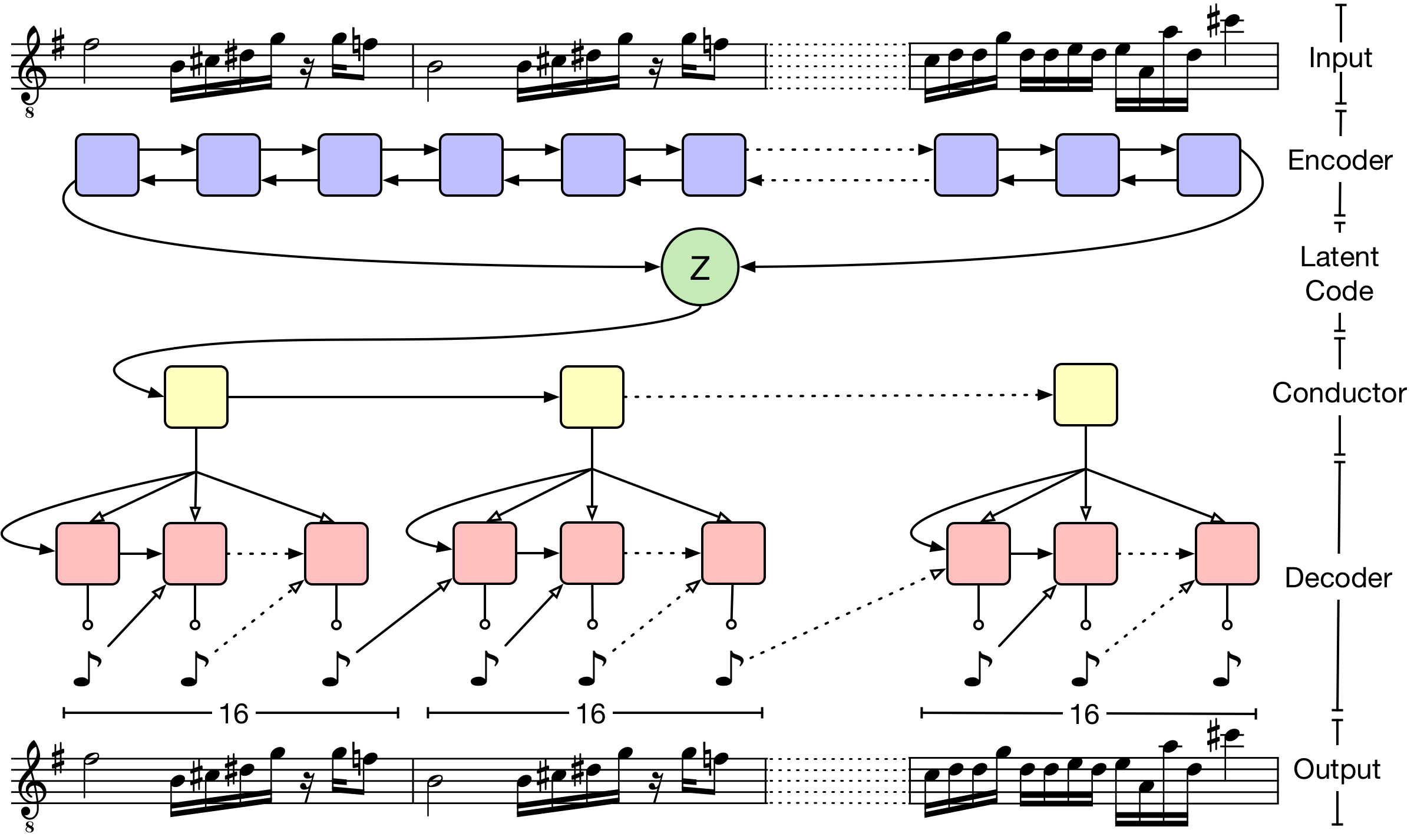
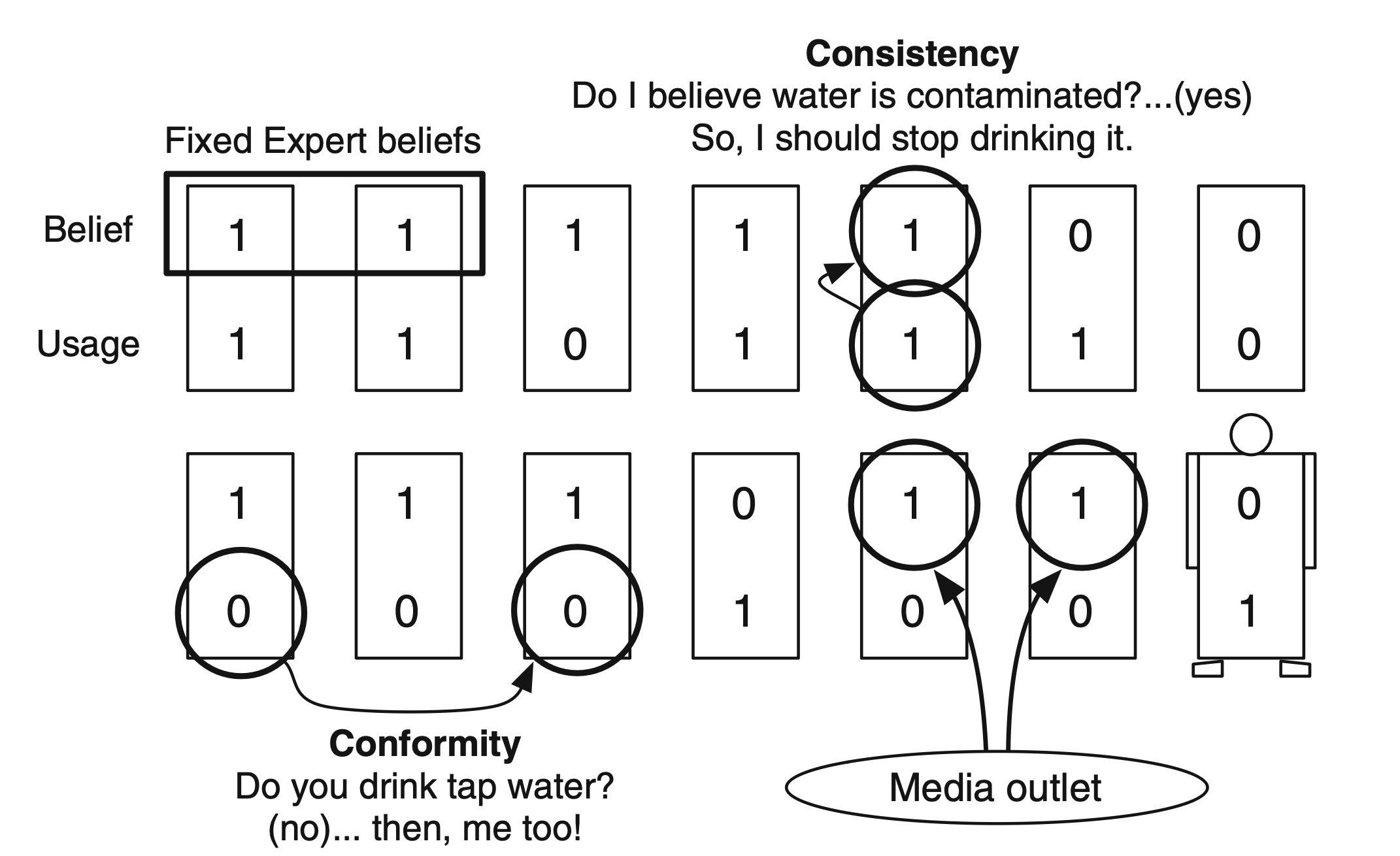
Can unsupervised deep learning methods encode fundamental music-theoretic features? We answer this question by training an autoencoder on J.S. Bach’s Well-Tempered Clavier and analyzing its latent space via principal component analysis. Sequences in the first two principal components are clustered hierarchically into pieces and keys that spontaneously arrange in a circle-of-fifths geometry.

with Najla Sadek

Complex Systems & Society

Emergent dynamics of coupled agents, from social and hydrological systems to ecological interactions.

Granular Materials & Multi-Scale Modeling

Granular Materials & Multi-Scale Modeling

Granular MaterialsMulti-scale ModelingPDF Equations

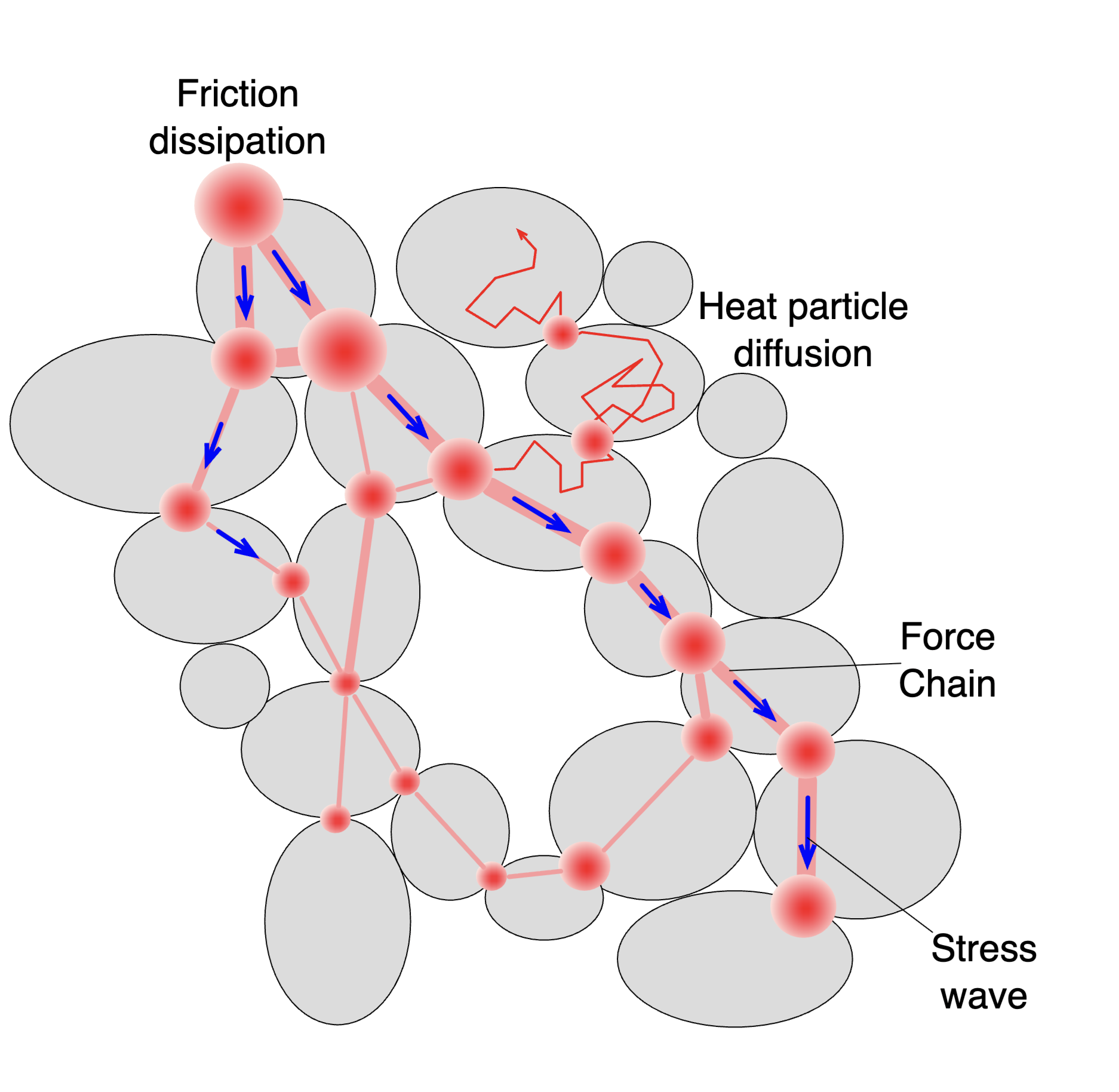
The multi-scale problem in granular media: micro-scale particle interactions produce macro-scale flow behaviour that no closed-form constitutive law captures cleanly. My PhD with Daniel Tartakovsky at Stanford developed probabilistic coarse-graining techniques that bridge micro and macro-scale desciptions. The framing (probabilistic multi-scale) is what later carried into many scientific-ML projects.

with Daniel Tartakovsky
Agent-Based Models of Social & Ecological Systems

Agent-Based Models of Social & Ecological Systems

Agent-based modelssocio-hydrology

How do you get from an ABM of thousands of agents to a compact macroscopic model that still captures the phenomenon? This project, started as part of an internship at Los Alamos National Lab, coupling hydrology to social response, applies hybrid stochastic social and ecological agent-based modeling in combination with methods in control theory to inform decision making and minimize the risk of contracting disease from polluted acquifers.

with Dan O'Malley, Velimir V Vesselinov

Learning & Language Tools

Systems that help humans think, learn, and reflect: knowledge graphs, note archives, and interactive teaching platforms.

SemAtlas

SemAtlas

knowledge graphdigital humanitieslanguage

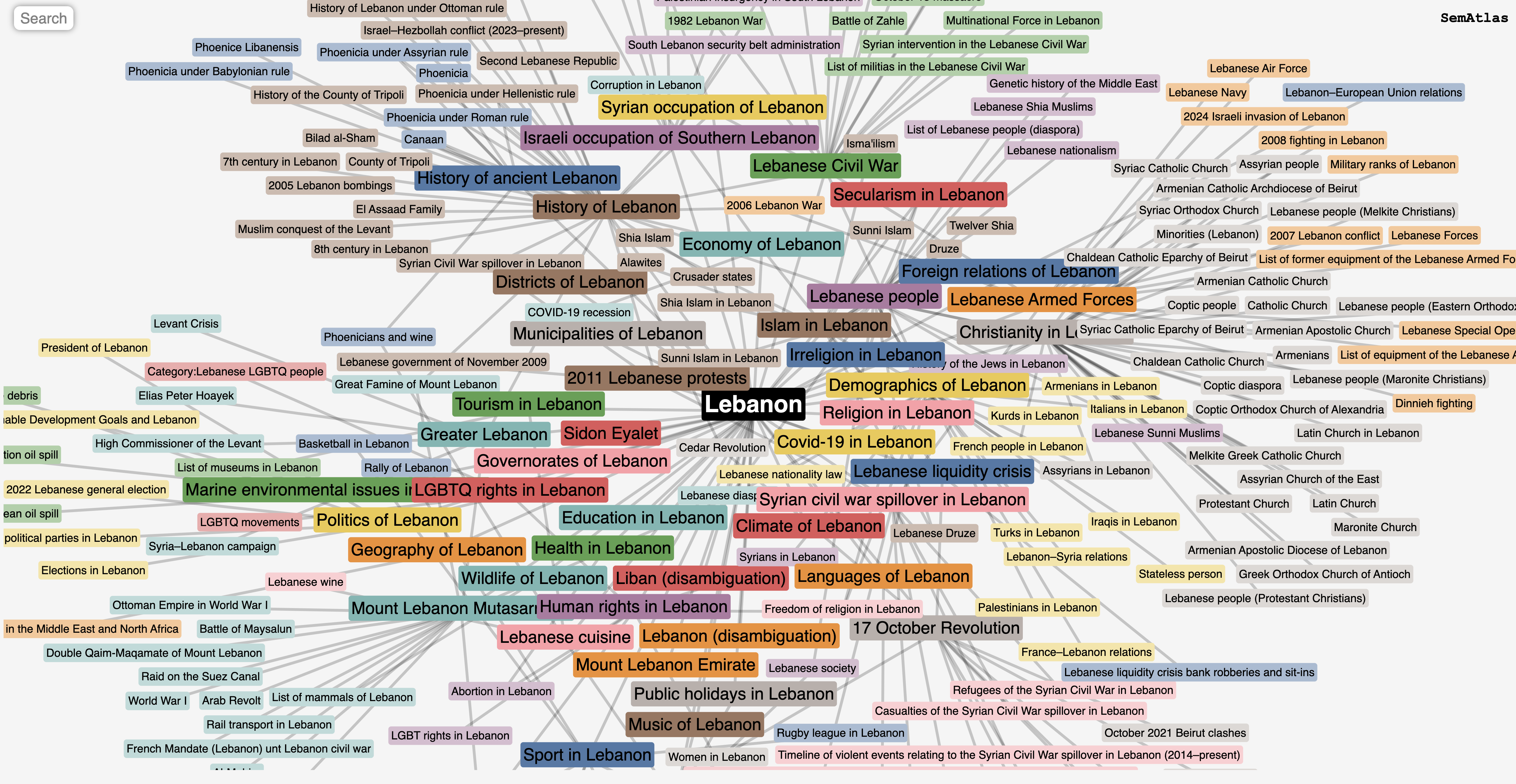
SemAtlas is a tool for making the structure of a body of writing visible, currently built on Wikipedia. Nodes are articles, edges are hyperlink connections, and the layout is a semantic map you can zoom, filter, and drill through. It is built using the D3js library.

Sematlas LearnSlides

Sematlas LearnSlides

educationteaching

LearnSlides is the platform underneath ml4science and intro2ml. Slides are structured HTML in a stable grammar (RevealJS based). A slide-context chat layer can answer questions based on the lecture decks. The goal is an open, local-model-friendly, remixable teaching material where every course can be leveraged for the next.

funders and partners

Center for Advanced Mathematical Sciences CAMS, AUB (collaborator + funder)
American University of Beirut URB, AI Hub, Science Meets Arts initiative